4 hr
Cape Cod Whale Watching Expedition
Three-hour ocean voyage to observe humpback, finback, and endangered right whales in their natural habitat
Reserve
Hand-picked by our editors — only the best 5 whale watching experiences from 12 reviewed.
Verified partners for every tour, free cancellation where available, and instant confirmation on every booking.
4 hr
Three-hour ocean voyage to observe humpback, finback, and endangered right whales in their natural habitat
Reserve
4 hr
Four-hour marine safari to Stellwagen Bank sanctuary in search of humpbacks, right whales, and more
Reserve
3 hr 30 min
High-speed cruise to spot humpback, fin, and minke whales with expert aquarium naturalists aboard
ReservePrices from verified partners. Availability updates in real time at checkout. Free cancellation policies apply where shown.
The landmarks, rooms, and views travelers on this tour remember — all visible on a single visit.
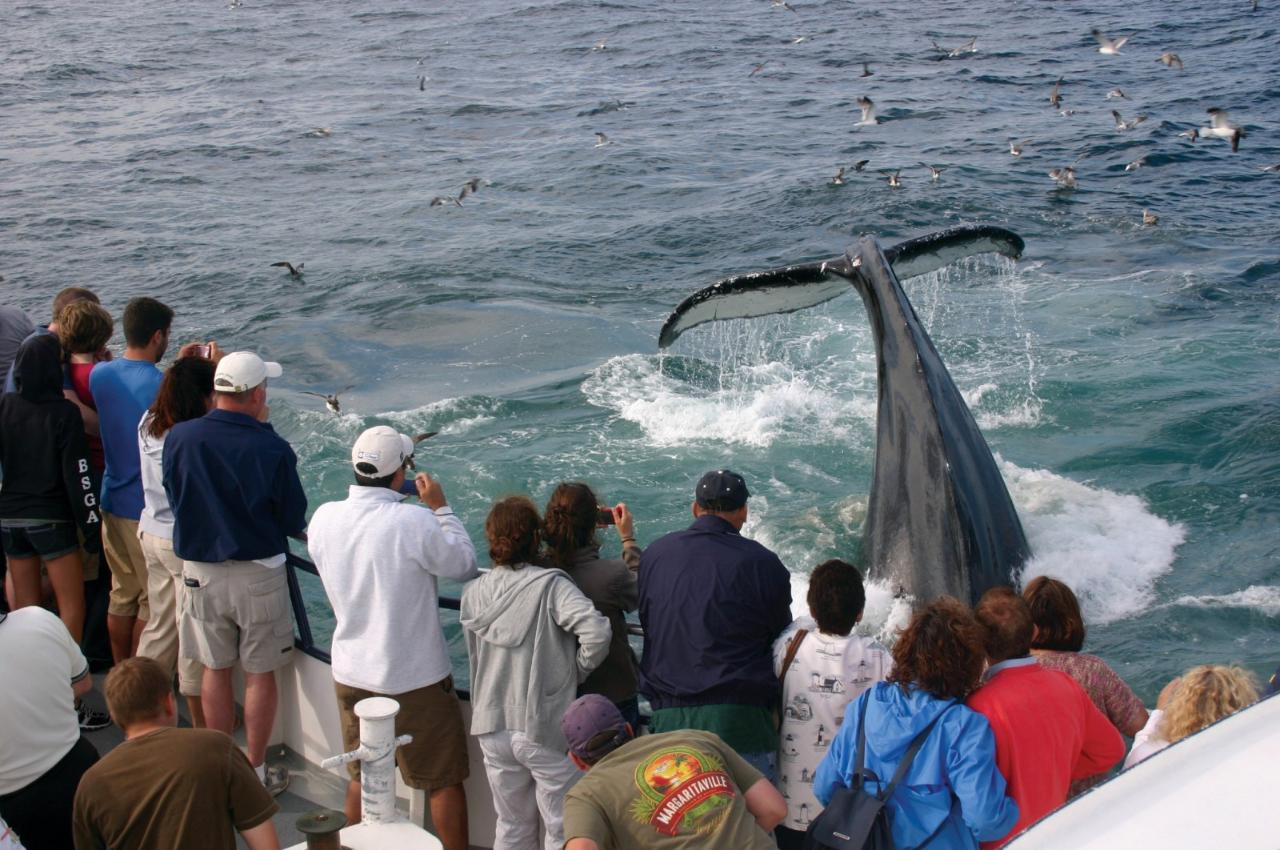
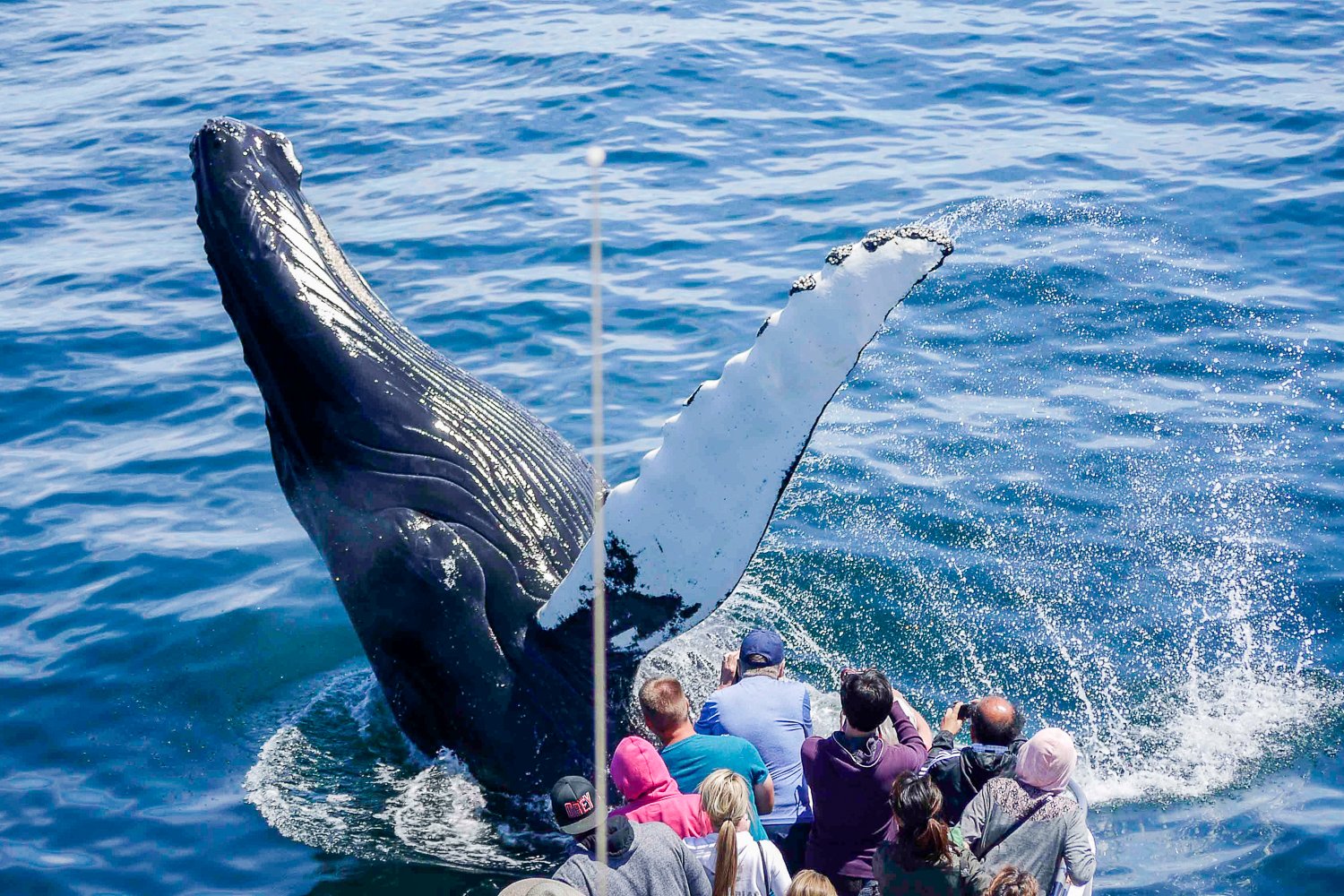
Witness massive humpback whales displaying natural behaviors in their protected feeding grounds.
Provincetown offers a shorter journey to the marine sanctuary, while Boston provides greater accessibility for city-based travelers. Most visitors who prioritize maximum time observing marine mammals choose the provincetown whale watching cruise as the more thrilling option.
| Feature | Top pick Provincetown | Boston Tours |
|---|---|---|
Proximity to Sanctuary |
Adjacent to Stellwagen Bank | 1-2 hour transit required |
Travel Time to Feeding Grounds |
15–30 minutes | 1.5–2 hours |
Departure Convenience |
Pier access at MacMillan Pier | Central city harbor access |
Typical On-Board Amenities |
Naturalist narration and galley | Naturalist narration and snack bar |
Crowd Levels |
Moderate seasonal variability | High seasonal volume |
provincetown whale watching cruise tickets |
Varies by operator | Varies by operator |
| See tickets → |
Verdict: Choose the provincetown whale watching cruise tour to spend less time transiting and more time in the sanctuary, or select Boston if you require central hub convenience for your provincetown whale watching cruise tours.
Choose your ticket, select your date, and reserve in under two minutes. Secure checkout handled by our verified partner.
Instant confirmation by email, with a mobile voucher you can save offline. No printing, no queuing at a collection desk.
Arrive at the entrance, show your voucher on your phone, and walk in. Most tickets include priority or skip-the-line access.
Practical details for your visit straight from our verified partners — hours, access, rules, and how to get there.
MacMillan Pier, Provincetown, MA 02657
Main departure point for most boat tours
Follow Route 6 into Provincetown and follow signs for MacMillan Pier parking.
Seasonal ferry services from Boston arrive directly at MacMillan Pier.
Dress in layers, as temperatures on the water can be 10 to 15 degrees cooler than on land. Windproof, waterproof jackets and traction-ready flat shoes are recommended for your provincetown whale watching cruise.
Space is limited on vessels, so avoid large bags or bulky coolers. Most operators provide standard security protocols at the pier, but guests should keep personal items compact.
Photography is encouraged on every provincetown whale watching cruise, but ensure equipment is protected from salt spray. A camera and binoculars are essential for capturing marine life.
Inquire directly with your chosen provincetown whale watching cruise operator regarding accessibility features. Vessel layouts vary, and the pier environment can be busy during the summer months.
A provincetown whale watching cruise is widely considered a family-friendly excursion. Operators often provide educational resources for children to enhance their understanding of the sanctuary.
Many boats offer full galley service with snacks and beverages for purchase during your provincetown whale watching cruise. Check with your specific provider if you wish to bring your own light refreshments.
MacMillan Pier, Provincetown, MA 02657
Main departure point for most boat tours
Get directionsBest time to go, insider tips, nearby landmarks, and the cancellation fine print — flip through to skim what matters to you.
How crowds, weather, and events shift across the year.
May trips offer calm waters, though schedules are often limited to weekends.
June through August is peak season for a provincetown whale watching cruise with frequent daily departures.
September and October offer excellent wildlife sightings with thinner crowds and cooler, crisp air.
Sightings are frequent throughout the season as whales feed in the sanctuary from April to October.
Small details that turn a good visit into a great one.
Take medication prior to boarding and look at the horizon while on the water.
The MacMillan Pier parking lot fills quickly; consider arriving near 09:00 for the best access.
Reserve your provincetown whale watching cruise tickets in advance to guarantee your spot during peak summer.
Do not plan dinner reservations or ferry connections immediately following your expected return time.
Even on warm days, the ocean breeze is significant; always carry a jacket.
Ask the onboard naturalists questions about the sanctuary to get the most from your trip.
Non-bookable sights within a short walk — free to visit, easy to pair.
Historic tower offering expansive views of Cape Cod
Local gallery showcasing regional artistic heritage
The heart of town with local shops and dining
Secluded beach ideal for coastal walks
Flexible, no hidden fees.
Review operator-specific cancellation policies when booking your provincetown whale watching cruise. Generally, trips operate in rain unless conditions are unsafe, in which case a pass for a future visit is typically offered instead of a cash refund.
Hand-picked options within walking distance — pick a district for vibe, or a specific hotel for convenience.
Adults-only retreat with pool and courtyard
Traditional seaside lodging near the coast
Modern accommodations near the bay
Stellwagen Bank National Marine Sanctuary protects 842 square miles of open ocean between Cape Cod and Cape Ann, where nutrient-rich upwellings create one of the North Atlantic's most productive feeding grounds. Designated in 1992, the sanctuary shelters sixteen cetacean species, including resident populations of humpback, finback, and minke whales that return each spring to gorge on sand lance, herring, and krill congregating over the submerged plateau. Water depth drops from thirty feet at the bank's crest to three hundred feet along its flanks, forcing cold currents upward and concentrating plankton blooms visible from the surface as green-brown patches stretching for miles. Provincetown occupies the geographic tip of Cape Cod, jutting fifteen miles into the Atlantic and placing MacMillan Pier closer to Stellwagen's southern edge than any other mainland port. The sanctuary boundary begins seven miles offshore, reducing transit time and maximizing observation windows. Commercial whale watching launched here in 1975, three decades before federal protection formalized the area's ecological significance. Today naturalists aboard Provincetown whale watching cruise tours catalog individual whales by dorsal fin notches and fluke patterns, contributing photographic data to the Gulf of Maine Humpback Whale Catalog, which tracks over nine hundred named animals. Humpback whales measure forty to fifty feet and weigh thirty tons, yet breach entirely clear of the water in displays biologists attribute to communication, parasite removal, or play. Finbacks—the ocean's second-largest animal—reach seventy feet but rarely surface fully, showing only a sleek dorsal ridge and asymmetrical jaw coloring. Minke whales, smallest of the sanctuary's baleen species, dart through bait balls at speeds exceeding twenty knots. Peak feeding activity occurs May through October when water temperature climbs above fifty degrees Fahrenheit. Sightings during this window approach ninety-five percent, though weather and prey distribution shift daily. Cruises departing MacMillan Pier follow a northwest bearing toward the bank's southern flank, crossing open water in forty to sixty minutes depending on sea state. Onboard naturalists interpret surface behaviors—tail slaps, flipper waves, bubble-net feeding—and identify species by blow height, dive intervals, and body shape. The sanctuary prohibits vessels from approaching within one hundred yards of whales, but animals frequently surface near boats, indifferent to human presence. Late-season trips coincide with cooler air temperatures and calmer seas, though spring departures offer higher concentrations of juveniles newly separated from mothers.

"Water depth drops from thirty feet at the bank's crest to three hundred feet along its flanks, forcing cold currents upward and concentrating plankton blooms visible from the surface."
A step-by-step walkthrough of the visit — what you'll see, how long each stage takes, and the details that matter.
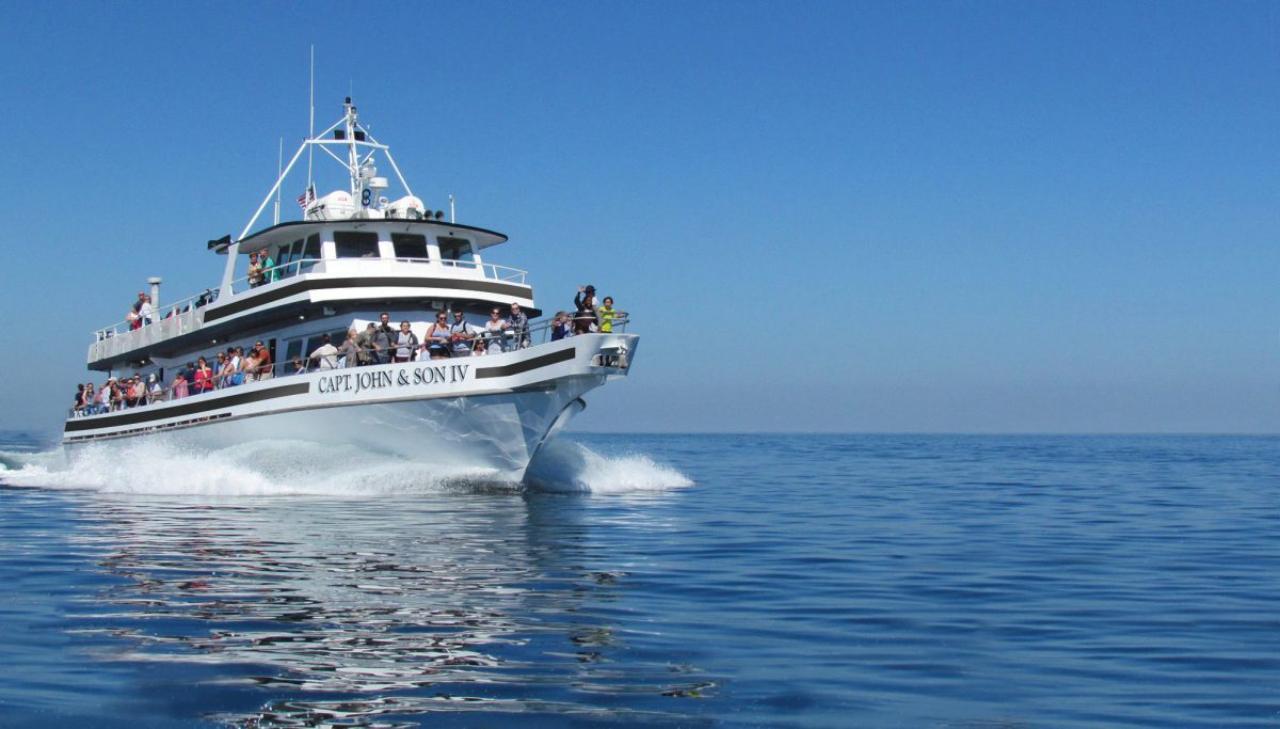
You board at MacMillan Pier thirty minutes before departure, scanning the harbor for the vessel's boarding flag. Crew directs you to open-air upper decks or enclosed cabin seating; most passengers choose exposure to wind despite the chill. The boat clears the breakwater and accelerates northwest, Provincetown's dunes shrinking astern. Naturalists brief you on sanctuary regulations and recent sightings—a mother-calf pair spotted yesterday near the southwest corner, a competitive pod of males observed bubble-net feeding. Forty minutes out, the engine throttles down. A spout erupts two hundred yards off the port bow—a vertical column dissipating in seconds. Binoculars track a dark hump rolling through the surface, dorsal fin confirming humpback identity. The whale dives, fluke lifting clear in a perfect silhouette before slipping under. You wait. Three minutes pass. The animal surfaces thirty yards closer, exhaling with a resonant blow audible across the water. It rolls, pectoral fin slapping twice, then arches into another dive. The naturalist identifies the individual by fluke markings—a male cataloged since 2014, nicknamed for the star-shaped scar on his left lobe. Two more whales surface simultaneously behind the boat. You rotate, camera ready, as one breaches fully, suspended for an impossible instant before crashing back in an explosion of white water. The return transit begins after ninety minutes on-site, your jacket damp with spray, fingers numb from gripping the rail.
Operators generally accept check-ins from 09:00–17:00 at MacMillan Pier.
There is 0 USD entrance fee for the sanctuary itself, though cruises carry varying ticket prices.
You can secure your provincetown whale watching cruise tickets online via official operator websites.
Summer (June–August) is popular, but shoulder months like May and September offer excellent wildlife viewing.
Yes, these tours are family-friendly and highly educational for children.
Pack sunglasses, sunscreen, a light jacket, and flat shoes for your provincetown whale watching cruise.
Paid parking is available at MacMillan Pier, but it fills rapidly; arrive at least one hour early.
Trips usually run in rain unless conditions are unsafe, in which case operators provide a pass for a future tour.
Policies vary, but most vessels provide galley service; check with your specific provincetown whale watching cruise provider.