Provincetown Whale Watching
Tours & tickets

Hand-picked by our editors — only the best 5 expeditions from 18 reviewed.

Open today 00:00–23:59
Attendance: Moderate — summer season
Marine conditions vary; always check weather before departure.
Free cancellation Instant confirmation Mobile voucher Verified partner Expert naturalist
Tickets

Choose your ticket

Verified partners for every tour, free cancellation where available, and instant confirmation on every booking.

Cape Cod Whale Watching Expedition 4 hr
Standard Entry

Cape Cod Whale Watching Expedition

4.8 (363)
€64
per person
Instant Mobile voucher Flexible — change up to 24h

Four-hour marine safari to Stellwagen Bank sanctuary, home to humpbacks, finbacks, and endangered right whales

Reserve
Boston Whale Watching Expedition 3 hr 30 min
Standard Entry

Boston Whale Watching Expedition

4.6 (5185)
€74
per person
Instant Mobile voucher Flexible — change up to 24h

High-speed coastal cruise to observe humpback, fin, and minke whales with expert naturalist commentary

Reserve

Prices from verified partners. Availability updates in real time at checkout. Free cancellation policies apply where shown.

What you'll do

Inside a tour, step by step

  1. 01 30 min

    Departure

    Boarding at MacMillan Wharf in Provincetown

Highlights

What you'll see inside the attraction

The landmarks, rooms, and views travelers on this tour remember — all visible on a single visit.

Stellwagen Bank

The central geographic feature of the sanctuary and a premier feeding ground for humpback and right whales.

Race Point Channel

A known transit point for whales and seabirds entering the sanctuary waters.

MacMillan Wharf

The heart of Provincetown's maritime activity and the primary departure point for sanctuary boat trips.

Head to head

Private Whale Watching Provincetown vs Commercial Fleet Tours

Private whale watching provincetown tours offer unmatched personal control, whereas commercial fleets provide a more social, structured experience with built-in educational staff.

Feature Top pick Private Charter Commercial Fleet
Exclusivity
Shared passenger space
Vessel Size
Usually 80–120 feet
Customization
Fixed routes and schedules
Group Atmosphere
High-density passenger count
Cost Efficiency
Budget-friendly per ticket
Observation Flexibility
Standardized deck viewing areas

Verdict: Those seeking the flexibility of a private whale watching provincetown tour should choose a charter, while travelers looking for professional narration and lower private whale watching provincetown tickets will prefer the commercial fleet.

How your ticket works

Book your ticket in 3 steps

  1. 01

    Book online

    Choose your ticket, select your date, and reserve in under two minutes. Secure checkout handled by our verified partner.

  2. 02

    Receive your mobile voucher

    Instant confirmation by email, with a mobile voucher you can save offline. No printing, no queuing at a collection desk.

  3. 03

    Show & enter

    Arrive at the entrance, show your voucher on your phone, and walk in. Most tickets include priority or skip-the-line access.

Plan your visit

Everything you need to know before you go

Practical details for your visit straight from our verified partners — hours, access, rules, and how to get there.

Open today · 00:00–23:59
Best arrival window
00:00–23:59
Address
Stellwagen Bank National Marine Sanctuary, Massachusetts Bay, MA
Vessel access required
Open marine sanctuary
Peak activity
May–October
Storage
Not available at sanctuary
Navigation
GPS required for vessels
Mon
Closed
Tue
Closed
Wed
Closed
Thu
Closed
Fri
Closed
Sat
Closed
Sun
Closed
Closed on: Every Monday (Weekly closure), Every Tuesday (Weekly closure), Every Wednesday (Weekly closure), Every Thursday (Weekly closure), Every Friday (Weekly closure), Every Saturday (Weekly closure)
Main entrance

MacMillan Wharf

Provincetown, MA

Primary hub for private whale watching provincetown tours

Address
Stellwagen Bank National Marine Sanctuary, Massachusetts Bay, MA
Storage
Not available at sanctuary
Navigation
GPS required for vessels

How to get there

🚗
Car · Variable cost · Public transport

Follow Route 6 to Provincetown and use municipal parking lots near the wharf.

Dress code

Dress in layers as ocean temperatures are significantly cooler than on land. Windproof jackets and non-slip footwear are recommended for all private whale watching provincetown trips.

Bags & security

Space is limited on smaller vessels. Keep personal items secure and minimal to ensure safety during your private whale watching provincetown tour.

Photography

Bring waterproof cases and extra batteries for your camera equipment. Stable zoom lenses are best for capturing marine life during private whale watching provincetown excursions.

Accessibility

Vessel accessibility varies by operator. Consult your specific private whale watching provincetown charter regarding wheelchair and mobility aid boarding capabilities.

Mobile phones

Cellular reception is spotty on the open ocean. Download maps or guides before heading out for your private whale watching provincetown adventure.

What to bring

  • Sunscreen
  • Polarized sunglasses
  • Binoculars
  • Sea-sickness medication
  • Windbreaker
  • Charged phone
  • Waterproof bag

Not allowed

  • Glass bottles
  • Large coolers
  • Drones
  • Illegal substances
  • Firearms
  • Unsecured tripods
  • Spray paint
  • Sharp objects
  • Harassing wildlife

Families & strollers

Private whale watching provincetown tours are highly popular with families. Ensure children are fitted with appropriate life jackets provided by the operator.

Food & drink

Carry adequate water and light snacks, though many private whale watching provincetown charters offer onboard service. Stay hydrated throughout your trip.

Pets

Pets are generally not permitted on commercial whale watching vessels. Check with your private charter operator for individual boat policies.

Good to know

Respect marine life by maintaining safe distances. Follow your captain's instructions at all times for the safest private whale watching provincetown experience.

Meeting point

Where to find us

MacMillan Wharf

Provincetown, MA

Primary hub for private whale watching provincetown tours

Get directions
Around your visit

Everything else worth knowing

Best time to go, insider tips, nearby landmarks, and the cancellation fine print — flip through to skim what matters to you.

Best time to visit

How crowds, weather, and events shift across the year.

Spring

Mild weather begins in April and May, ideal for early migration sightings.

Summer

Peak whale activity from June through August with warmer temperatures.

Fall

Excellent sightings persist through October with fewer crowds on the water.

Helpful tips for your visit

Small details that turn a good visit into a great one.

Book Early

Peak season slots for private whale watching provincetown tours fill up months in advance.

Check Weather

Marine forecasts are critical; always confirm with your operator before heading to the wharf.

Sea Sickness

Take preventative measures at least one hour before boarding your private whale watching provincetown vessel.

Follow Naturalists

Listen to onboard naturalists to learn about sanctuary conservation efforts.

Early Morning

Early morning departures often offer the calmest waters for whale watching.

Nearby landmarks

Non-bookable sights within a short walk — free to visit, easy to pair.

Race Point Lighthouse

15 min

Iconic historic lighthouse overlooking the Atlantic.

Cancellation policy

Flexible, no hidden fees.

As Stellwagen Bank National Marine Sanctuary is an open ocean area, tours are subject to operator-specific policies. Most private whale watching provincetown tours require 24–48 hours notice for full refunds.

Where to stay

Hotels & districts near the attraction

Hand-picked options within walking distance — pick a district for vibe, or a specific hotel for convenience.

Provincetown District

5 min
boutique

Range of inns and guest houses near the harbor.

About

The place, in context

Stellwagen Bank rises 600 feet from the surrounding Atlantic floor, creating a nutrient-rich upwelling that sustains one of the Western Hemisphere's densest concentrations of marine mammals. Designated a National Marine Sanctuary in 1992, the 842-square-mile protected zone lies 25 miles north of Provincetown and harbors seasonal populations of humpback, finback, and minke whales alongside Atlantic white-sided dolphins. The sanctuary's glacial geology—a submerged plateau shaped during the last ice age—channels cold Labrador Current water across sand ridges and gravel banks, driving sand lance and herring into dense schools that draw baleen whales from April through October. Private whale watching provincetown charters launch from MacMillan Pier, the historic working waterfront where Portuguese fishing fleets unloaded cod for two centuries before marine ecotourism emerged in the 1970s. Today's expeditions follow fixed routes into federally monitored waters, guided by naturalists trained under NOAA protocols and captains holding Commercial Operator permits issued by the sanctuary's management division. The distinction between shared and exclusive charters is operational: private vessels adjust routes in real time based on radio reports from the Center for Coastal Studies' aerial survey team, which flies twice-daily transects during peak season to map whale distribution across stellwagen's feeding grounds. Humpback whales—identified individually through fluke photography and catalogued since 1979—return to the bank with fidelity rates exceeding 90 percent. Researchers have documented three-generation matrilines feeding within sight of Race Point Light, with calves born in Caribbean calving grounds arriving in Massachusetts waters by late spring. Bubble-net feeding, a cooperative hunting behavior in which whales spiral below herring schools while exhaling compressed air to create cylindrical nets, occurs most frequently over the southwestern corner of the bank where depth drops from 100 to 300 feet within a quarter mile. Finback whales, the sanctuary's largest resident species at 70 feet, surface less predictably but congregate near the northern boundary where tidal currents concentrate plankton. Private whale watching provincetown tours operate under carrying-capacity limits enforced by the sanctuary: no more than three vessels within 600 feet of a single whale, engines in neutral within 100 yards, and mandatory 500-yard buffer zones around cow-calf pairs. These restrictions, combined with real-time positioning data shared across the commercial fleet, create encounter windows measured in minutes rather than hours—a regulatory framework designed to balance tourism access with long-term population stability for species still recovering from 20th-century industrial whaling pressure.

"Stellwagen's glacial plateau channels cold current across sand ridges, driving baitfish into schools that draw humpback whales from April through October."
Your experience

What a tour day looks like

A step-by-step walkthrough of the visit — what you'll see, how long each stage takes, and the details that matter.

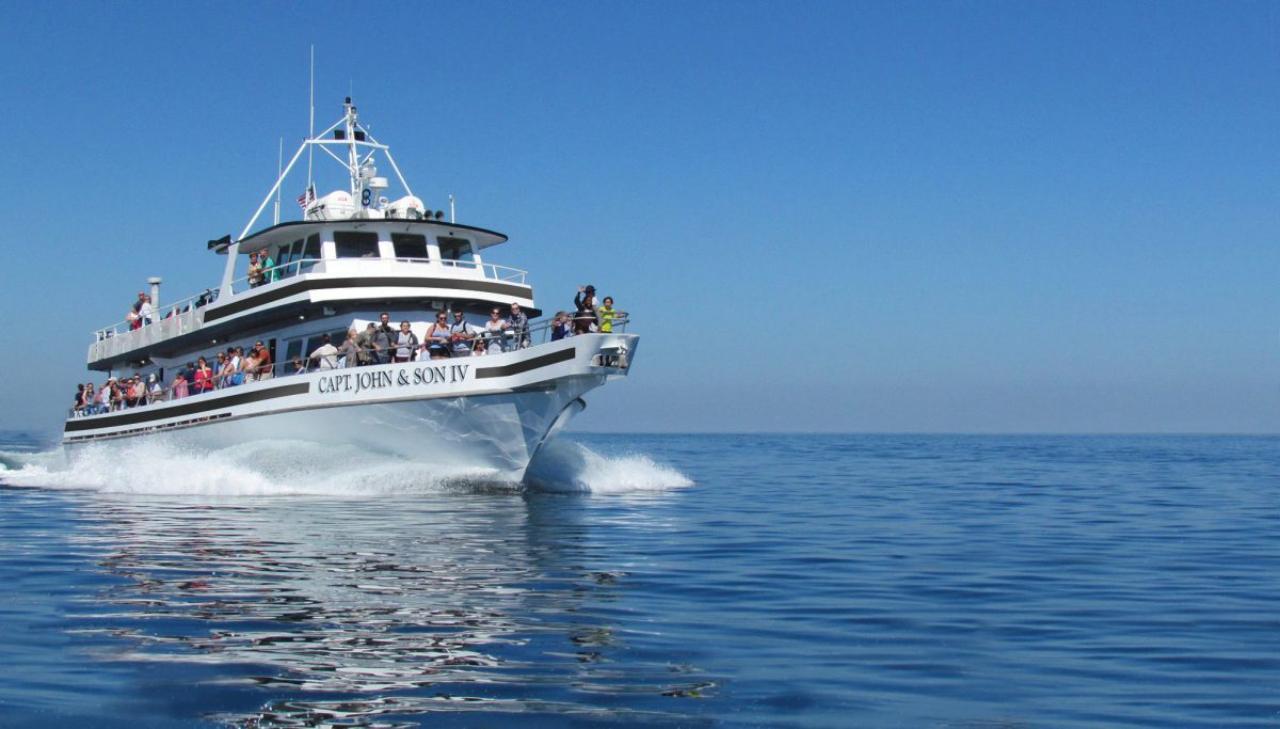
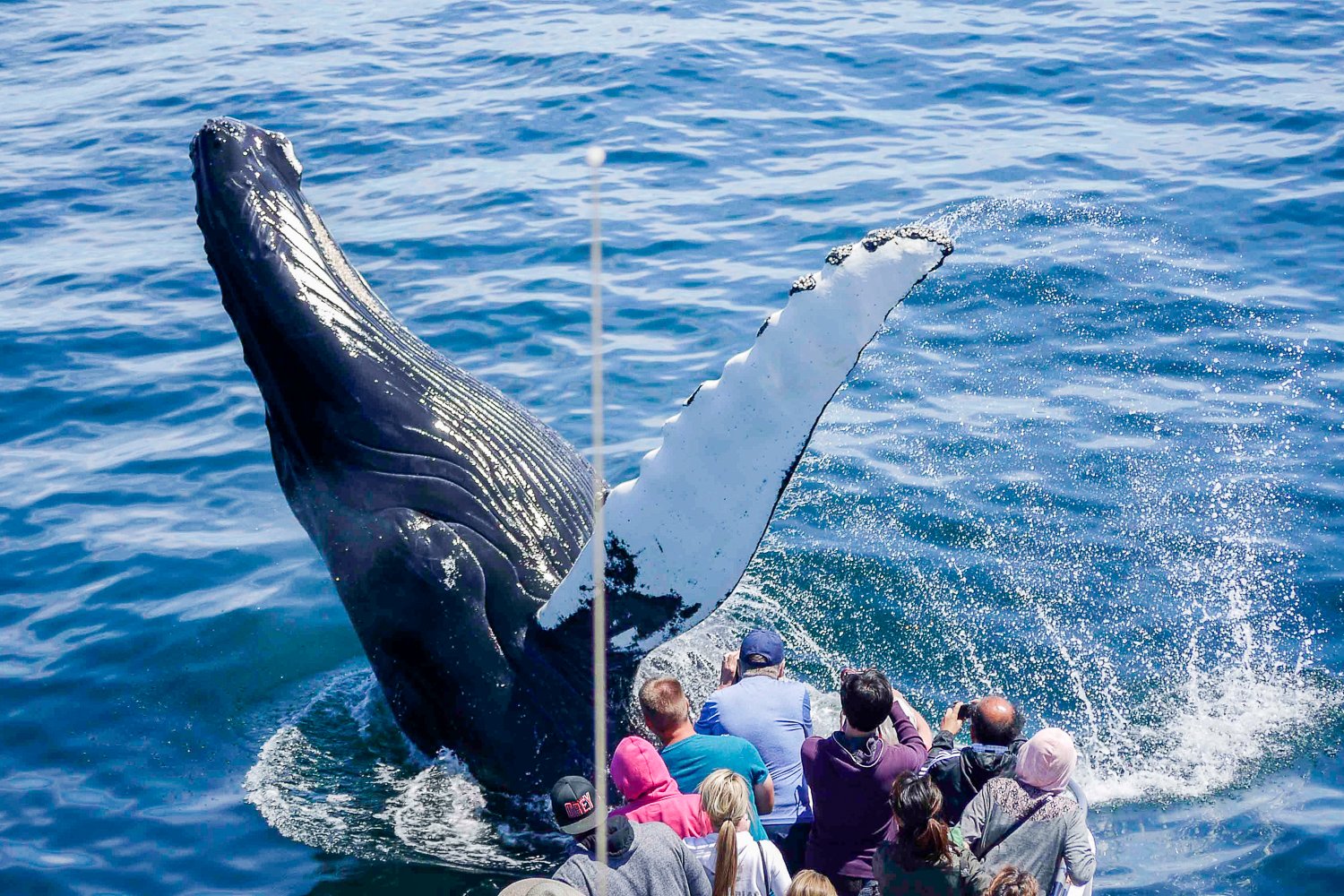
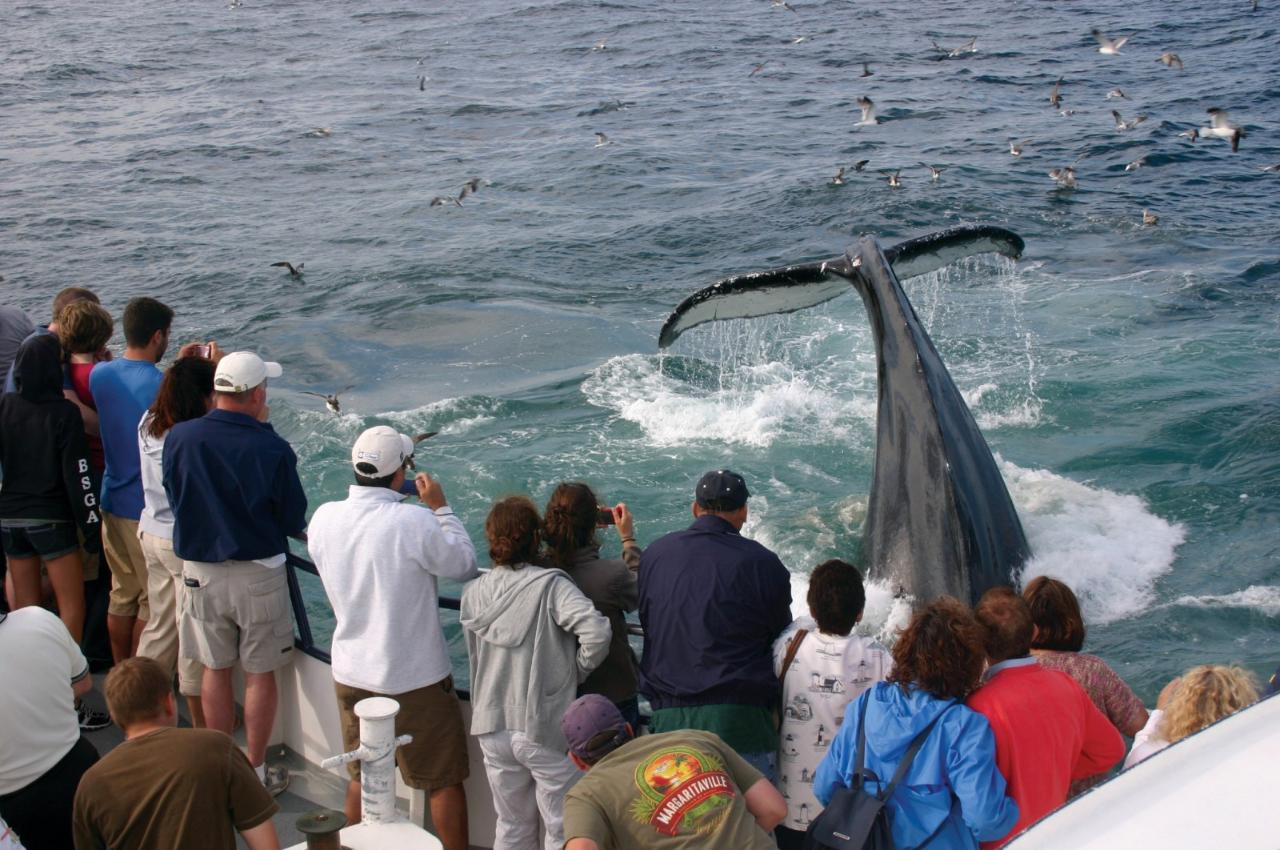
You board at MacMillan Pier thirty minutes before departure, stepping from weathered planks onto a charter vessel outfitted with hydrophone speakers and a foredeck observation platform. The captain briefs the route—25 miles north-northeast into federal waters—while the naturalist distributes laminated fluke identification cards showing resident whales catalogued by the Provincetown Center for Coastal Studies. The engine pitch drops as you clear the harbor breakwater, and Long Point Light recedes into the dune line. Forty minutes offshore, the depth finder marks the sanctuary boundary where bottom contour shifts from 180 to 90 feet. The naturalist scans with binoculars, radio chatter from nearby vessels reporting a pod working the southwestern ridge. You spot the first blow—a vertical column of vapor rising 15 feet—then a second, closer. The captain cuts throttle. A humpback surfaces 50 yards to starboard, exhales, arches its back, and raises its fluke vertically before descending. The black-and-white pigmentation pattern matches a card in your hand: a 12-year-old female named Perseid, documented in these waters since 2014. She surfaces twice more, joined by a smaller individual, before the pair moves east. You spend 90 minutes tracking three separate groups, watching one animal lunge-feed through a herring school, jaws agape, before the return transit begins.

Frequently asked

Frequently asked questions about private whale watching provincetown tours

Are there entrance fees for the sanctuary?

Entry to the sanctuary is 0 USD as it is an open marine area. However, private whale watching provincetown tours require paid vessel charters.

What are the operating hours for private whale watching provincetown tours?

Operating hours are set by individual operators, though the sanctuary itself is accessible 24/7 by vessel.

How do I get to the sanctuary for my private whale watching provincetown trip?

Most tours depart from MacMillan Wharf in Provincetown, accessible by ferry or car.

Can I book private whale watching provincetown tickets online?

Yes, most local operators allow booking private whale watching provincetown tickets through their official websites.

Is the sanctuary open 24/7?

Yes, the sanctuary is an open ocean area accessible 24/7 by private or commercial vessel.

What is the best time for private whale watching provincetown?

The best time for private whale watching provincetown is between May and October when feeding activity is at its peak.

Are there prohibited items on private whale watching provincetown tours?

Prohibited items vary by operator, but generally include drones and items that threaten marine safety or wildlife.

Can I bring children on a private whale watching provincetown tour?

Yes, families are welcome, though you should check age-specific safety requirements with your provider.

Are there nearby landmarks to visit after my tour?

Yes, you can visit the historic Race Point Lighthouse or explore the local museums in Provincetown.