
4 hr
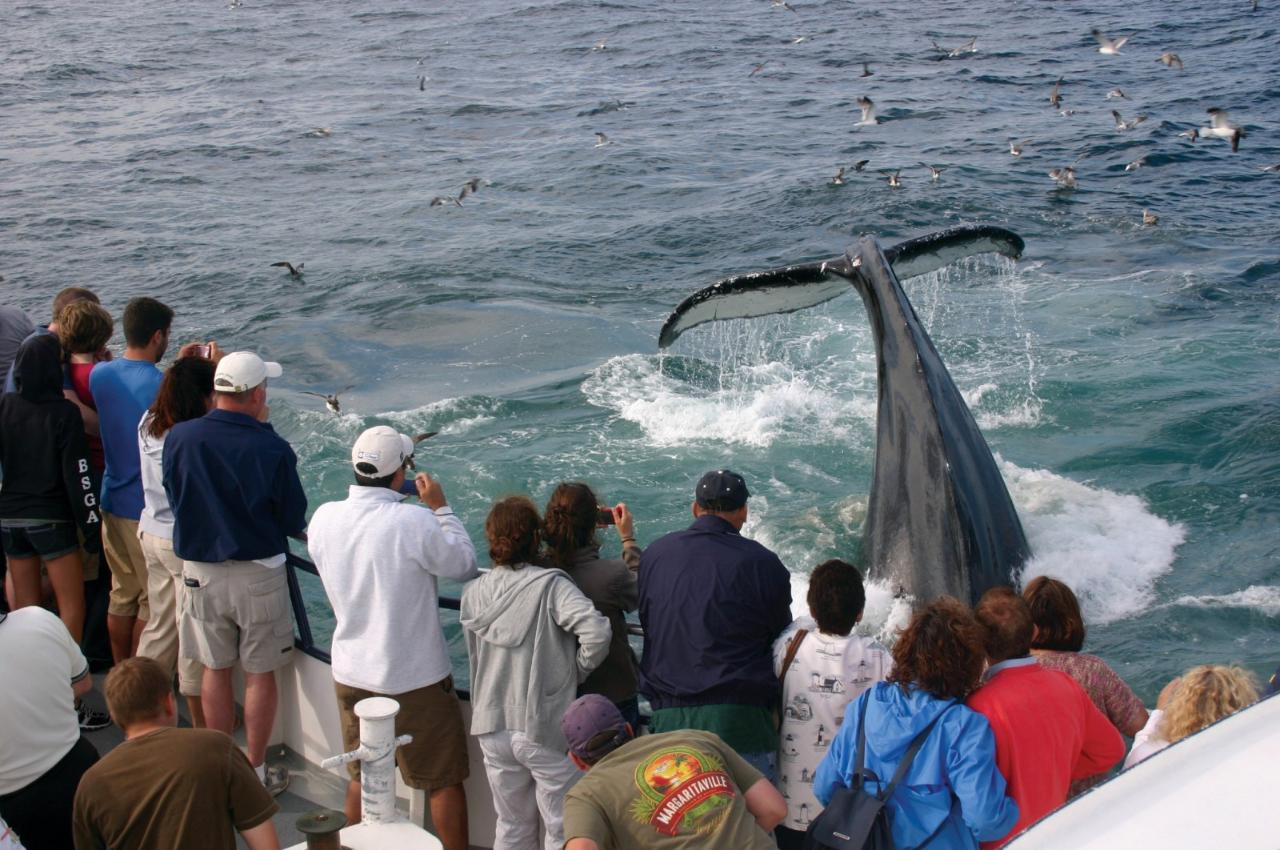
Cape Cod Whale Watching Expedition
Get close to humpbacks, finbacks, and endangered right whales on a naturalist-guided ocean voyage
Reserve

Hand-picked by our editors — the best 5 marine experiences from 14 reviewed
Verified partners for every tour, free cancellation where available, and instant confirmation on every booking.
4 hr
Get close to humpbacks, finbacks, and endangered right whales on a naturalist-guided ocean voyage
Reserve
2 hr
Wade through Provincetown's working tidal flats and see how oysters go from seed to harvest at a research-backed sea farm.
Reserve
2 hr
Walk through P-town's colorful past while savoring New England's finest seafood classics
ReservePrices from verified partners. Availability updates in real time at checkout. Free cancellation policies apply where shown.
The landmarks, rooms, and views travelers on this tour remember — all visible on a single visit.
This underwater feature is the primary feeding ground for whales and creates unique nutrient-rich conditions. It spans 842 square miles of protected habitat.
These migratory giants are frequently observed breaching and feeding in the sanctuary waters. They typically grow up to 50 feet in length.
Most vessels include a dedicated area where experts explain the ecology of Stellwagen Bank National Marine Sanctuary. This helps guests identify different species.
The area serves as a critical path for various whale species during their seasonal migrations. It is one of the most active marine observation sites in the USA.
Beyond whales, the sanctuary hosts diverse avian life including gannets and shearwaters. Keep your eyes on the horizon for these frequent visitors.
Provincetown provides closer proximity to the Stellwagen Bank National Marine Sanctuary, while Boston offers centralized city accessibility; most visitors seeking efficiency prefer the shorter transit time of Provincetown whale watching tickets tours.
| Feature | Top pick Provincetown Departures | Boston Departures |
|---|---|---|
Travel distance to sanctuary |
6–10 miles | 25–30 miles |
Typical transit time |
20–30 minutes | 60–90 minutes |
Vessel size and amenities |
Medium vessels; full service | Large catamarans; extensive amenities |
Vessel departure frequency |
High during summer | High daily schedules |
Viewpoint congestion |
Moderate | High |
Coastal scenery |
Cape Cod dunes | Boston Harbor and islands |
| See tickets → |
Verdict: Those prioritizing maximum time on the water should choose Provincetown whale watching tickets, whereas those visiting Boston for urban exploration may favor the convenience of booking provincial whale watching tickets tour options closer to their hotel.
Choose your ticket, select your date, and reserve in under two minutes. Secure checkout handled by our verified partner.
Instant confirmation by email, with a mobile voucher you can save offline. No printing, no queuing at a collection desk.
Arrive at the entrance, show your voucher on your phone, and walk in. Most tickets include priority or skip-the-line access.
Practical details for your visit straight from our verified partners — hours, access, rules, and how to get there.
Provincetown, MA
Primary departure point for most provincetown whale watching tickets tours
Follow Route 6 into Provincetown; public parking is available near the piers.
Wear layers, as temperatures on the water in Stellwagen Bank National Marine Sanctuary are significantly cooler than on land. Non-slip rubber-soled shoes are recommended for safety on boat decks.
Most operators allow small personal bags or backpacks. Security checks may be performed at the dock before boarding your whale watching vessel.
Photography is encouraged within Stellwagen Bank National Marine Sanctuary. Ensure your gear is secured with a strap to prevent accidental drops into the water while observing marine life.
Vessel accessibility varies; contact your tour operator in advance to confirm wheelchair access for your provincetown whale watching tickets. Some docks may have physical limitations depending on the tide.
Mobile phone signal can be intermittent once you leave the coast. Use phones for photography, but consider a waterproof case for protection against salt spray.
Whale watching is suitable for families, though long durations on the water can be challenging for young children. Check age-specific safety requirements before booking your provincetown whale watching tickets.
Many boats feature an onboard galley selling snacks and beverages. Bringing a refillable water bottle is advised to stay hydrated during your excursion.
Pets are strictly prohibited on almost all whale watching vessels. Only certified service animals are typically permitted with prior authorization.
The sanctuary is a protected marine area; always follow crew instructions to maintain a respectful distance from whales. Check in for your provincetown whale watching tickets tour at least 30 minutes before departure.
Provincetown, MA
Primary departure point for most provincetown whale watching tickets tours
Get directionsBest time to go, insider tips, nearby landmarks, and the cancellation fine print — flip through to skim what matters to you.
How crowds, weather, and events shift across the year.
Whales begin arriving in April as temperatures rise to 50°F.
Small details that turn a good visit into a great one.
Reserve provincetown whale watching tickets online during summer to avoid sell-outs.
Non-bookable sights within a short walk — free to visit, easy to pair.
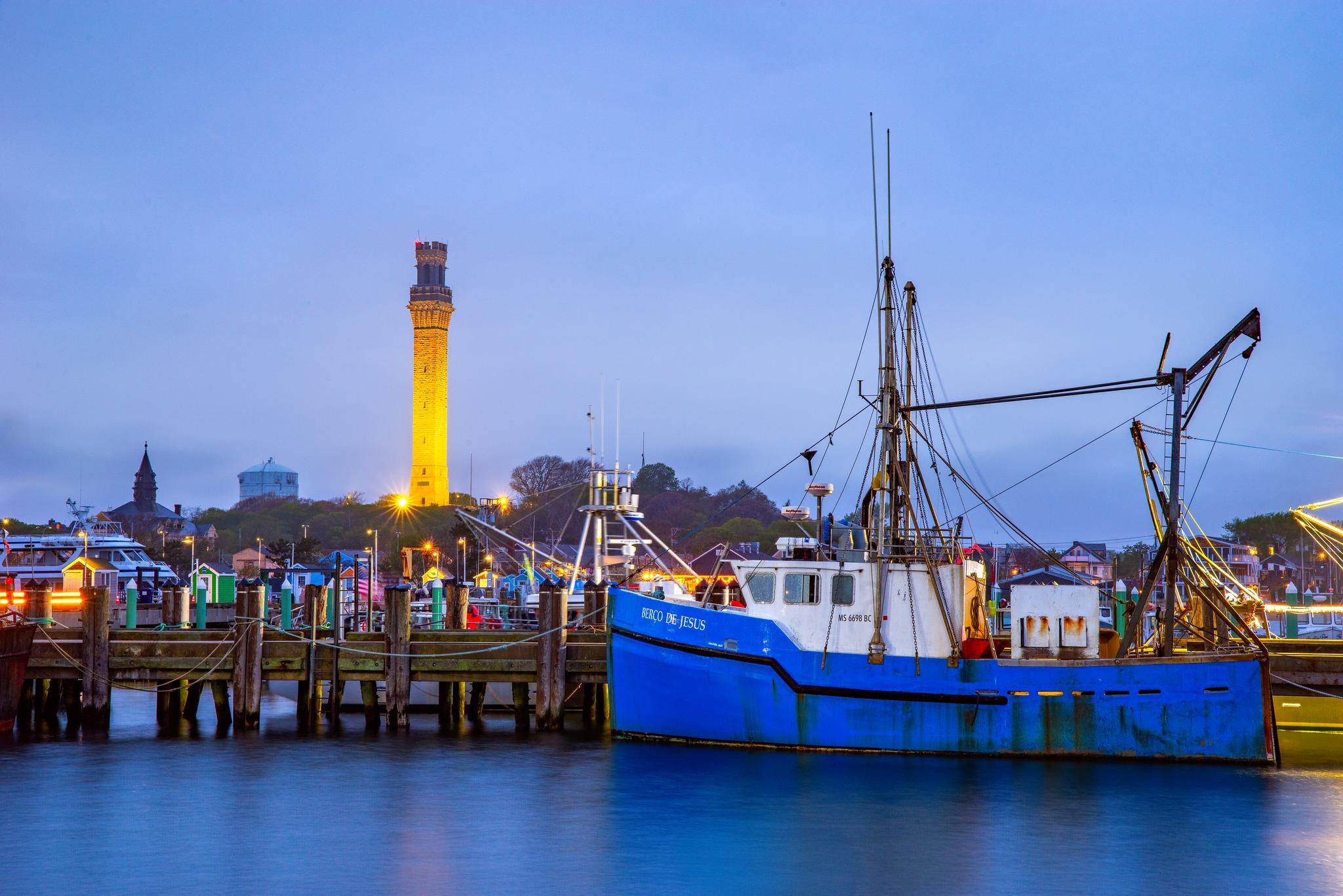
Historic tower offering panoramic views of the harbor and cape.
Flexible, no hidden fees.
Cancellation policies vary by operator for provincetown whale watching tickets tours. Most require 24 to 48 hours notice for a full refund of the base fare, excluding the 0 USD sanctuary entrance fee.
Hand-picked options within walking distance — pick a district for vibe, or a specific hotel for convenience.
Waterfront lodging providing easy access to tour docks.
Stellwagen Bank National Marine Sanctuary protects 842 square miles of Atlantic seabed between Cape Cod and Cape Ann, where glacial sand deposits create underwater plateaus rising 100 feet above the surrounding ocean floor. The topography funnels nutrient-rich currents upward, concentrating sand lance and krill in densities that support one of the Western Atlantic's most reliable feeding aggregations of humpback whales. NOAA designated the sanctuary in 1992 after two decades of advocacy by marine biologists who documented annual returns of catalogued individuals—some whales have visited these waters every summer for forty years. Provincetown's position at the tip of Cape Cod places its harbor seventeen nautical miles from the sanctuary's southern feeding grounds, a proximity that allows vessel operators to reach prime whale habitat within ninety minutes of departure. The town's whaling heritage, which peaked in the 1850s when seventy-two vessels worked from its piers, has inverted into a conservation economy: trained naturalists now interpret baleen morphology and fluke identification where rendering crews once worked. Humpback whales migrate here from Caribbean breeding grounds between April and October, their presence so consistent that the sanctuary records a 99 percent sighting success rate during peak season. Stellwagen Bank supports fourteen whale species, though humpbacks dominate summer observations due to their surface-active behavior—breaching, tail-slapping, and bubble-net feeding—that makes them visible from vessels. Fin whales, the sanctuary's second-most-common species, cruise the same waters but rarely exhibit aerial displays. Minke whales work the shallower eastern margins. The ecosystem also sustains Atlantic white-sided dolphins in pods exceeding two hundred individuals, harbor porpoises, and four sea turtle species. Securing Provincetown whale watching tickets grants access to a marine environment where federal protection, bathymetric advantage, and migratory biology converge into one of North America's most predictable cetacean encounters. The sanctuary's research legacy runs parallel to its tourism infrastructure. Scientists from the Center for Coastal Studies maintain a photo-identification catalog spanning five decades, tracking individual whales across ocean basins and documenting multi-generational site fidelity. Vessel operators contribute sighting data to real-time monitoring networks, and many expeditions carry researchers who collect behavioral observations alongside paying passengers. This dual-use model has produced peer-reviewed studies on humpback feeding strategies, vocal repertoires, and calf-rearing patterns while sustaining an industry that moves fifteen thousand visitors onto Stellwagen Bank waters each season.
"NOAA records a 99 percent sighting success rate during peak season, when catalogued humpbacks return to feeding grounds they have visited for forty years."
A step-by-step walkthrough of the visit — what you'll see, how long each stage takes, and the details that matter.
You board at MacMillan Pier in Provincetown Harbor, where naturalists brief passengers on fluke identification and responsible viewing protocols before the vessel clears the breakwater. The crossing to Stellwagen Bank takes seventy-five to ninety minutes, during which crew scan for blows on the horizon—vertical spouts that mark exhalations visible two miles away. As the boat enters sanctuary waters, the depth sounder drops from 180 feet to 80 feet, signaling arrival over the glacial plateau. Humpback whales surface in the feeding zone, their dark backs rolling through the water in four-breath sequences before they dive. You watch flukes rise vertically as the animal sounds, each tail marked with barnacle scars and pigmentation patterns unique as fingerprints. Naturalists match the markings to catalog entries, calling out names—Salt, Daffodil, Springboard—that link the whale before you to decades of documented returns. Bubble clouds appear fifty yards off the bow, precursors to a bubble-net: a whale spirals beneath a bait ball, releasing air to corral prey, then lunges upward with mouth agape and throat pleats distended. The vessel holds position for twenty minutes while whales circle and feed, then moves to a second sighting as radio chatter locates a mother-calf pair. The return crossing brings you back through Provincetown's harbor channel at dusk, the Pilgrim Monument rising over the dunes.
The sanctuary is a natural marine area accessible 00:00–23:59 every day.
We recommend arriving between 07:00–14:00 for the best visibility and standard vessel departures.
The entrance fee is 0 USD as the sanctuary is an open marine area.
Most tours welcome all ages, though infants should be monitored closely by parents.
Review the specific operator policy provided with your provincetown whale watching tickets for refund rules.
Yes, most operators permit personal snacks, and many sell food on board.
Photography is welcome, but keep equipment secured against salt spray and motion.
Vessel access depends on the specific boat; contact your provider to verify accessibility for your tour.
Visitors often spot humpback, fin, and minke whales within the sanctuary boundaries.